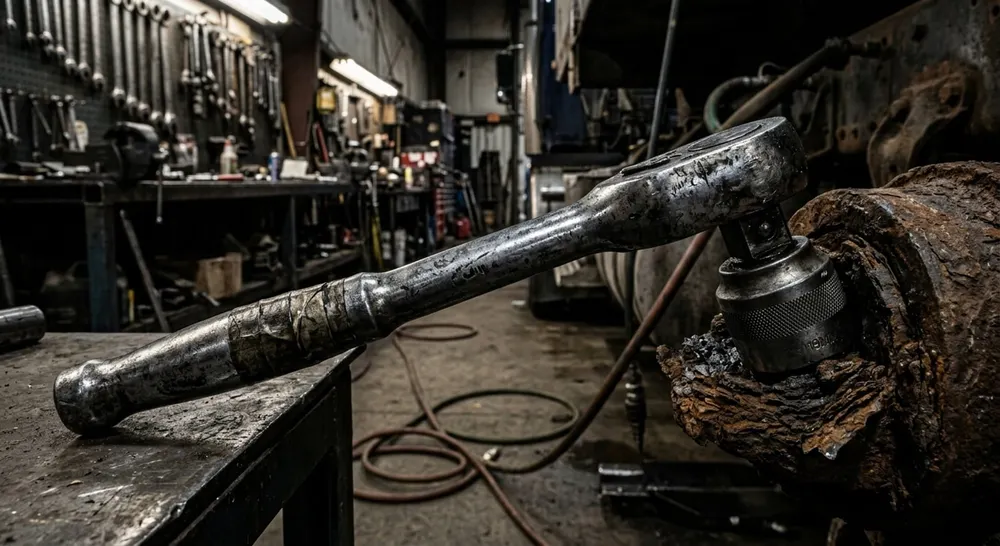
Detroit, MI — Mechanics and industrial engineers confirmed today that the 1/2-inch drive socket wrench does not actually turn stubborn bolts; the earth rotates underneath the fastener until the bolt gives up out of self-preservation.
While the flimsy 1/4-inch drive gets assigned to delicate trim pieces and the 3/8-inch drive handles routine maintenance, the 1/2-inch drive exists solely to negotiate with rust through absolute, unyielding force. Forged from solid chrome vanadium and a total disregard for human safety, this heavy-metal titan has spent decades snapping breaker bars and humbling stubborn suspension components.
Facts Surrounding the Legend of the 1/2-Inch Drive:
- Shear Strength: A 1/2-inch drive socket does not strip a bolt head; it re-threads the atomic structure of the metal to match its own will.
- Corrosion: Rust does not lock a nut onto a thread in the presence of a 1/2-inch drive. The rust simply evaporates to avoid the conflict.
- Torque Specifications: Torque wrenches do not measure force applied by a 1/2-inch drive; they measure the amount of mercy the socket chooses to extend.
- Impact Guns: Pneumatic impact guns don't power a 1/2-inch socket. The socket powers the compressor through sheer kinetic intimidation.
- The Missing 10mm: The 10mm socket frequently disappears from toolboxes not because it is lost, but because it is hiding from the 1/2-inch drive.
Garage veterans advise DIY enthusiasts to treat the tool with extreme caution. If you apply a cheater pipe to a 1/2-inch drive breaker bar, you are no longer doing auto repair—you are altering the orbital axis of the planet.